Quick answer: do raccoons eat bird seed?
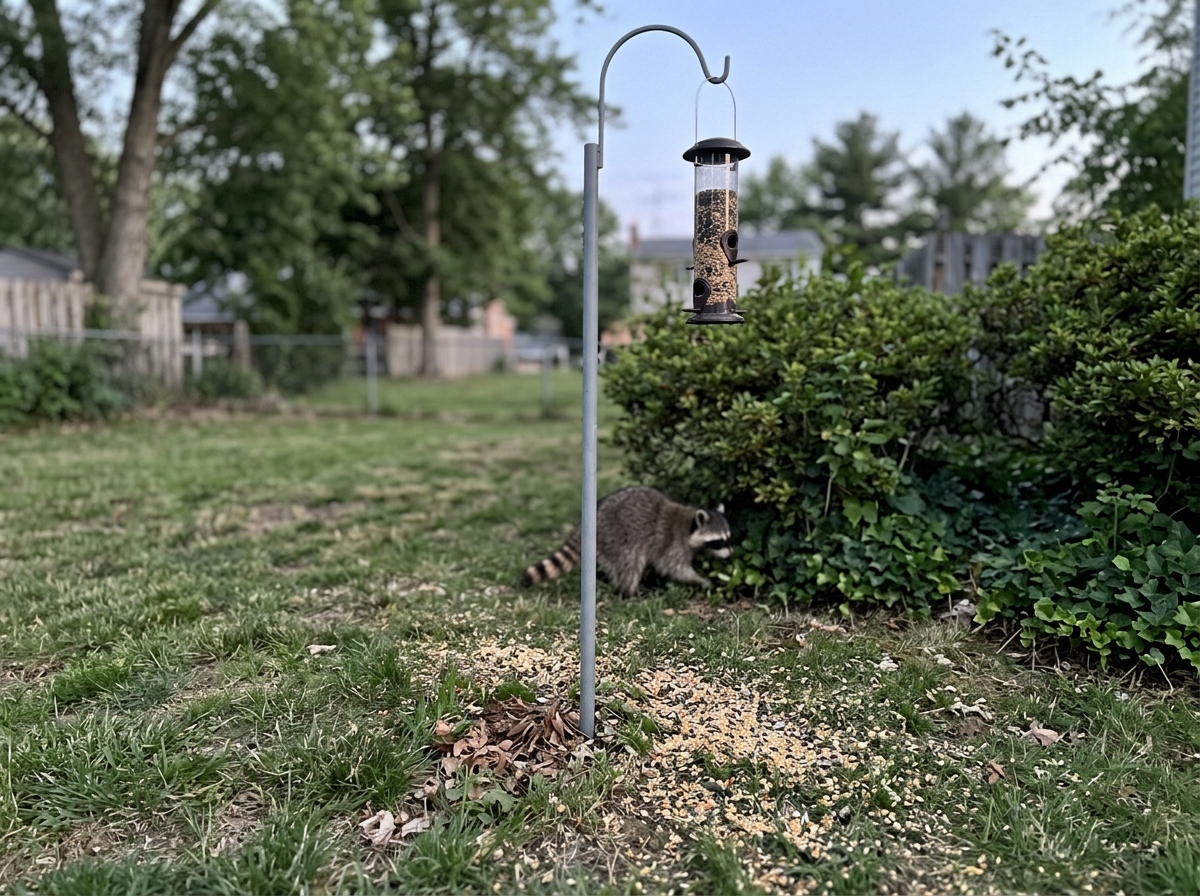
Yes, raccoons absolutely eat bird seed, and they are surprisingly good at finding it. They will raid hanging feeders, clean up spilled seed on the ground, dig through stored bags, and return night after night once they know a food source is there. Research from K-State Extension found that raccoons are seven times more likely to enter a yard that has a bird feeder than one that does not. So if you have a feeder and you are seeing signs of nighttime disturbance, raccoons are almost certainly involved.
What makes bird seed attractive to raccoons
Raccoons are opportunistic omnivores, which means they eat almost anything with caloric value. Bird seed checks a lot of their boxes: it is energy-dense, easy to access, and usually available in a predictable spot every single night. Sunflower seeds and mixed blends with corn, millet, or peanuts are especially attractive because they are high in fat and protein. Suet cakes are even more appealing to raccoons than dry seed because of their fat content.
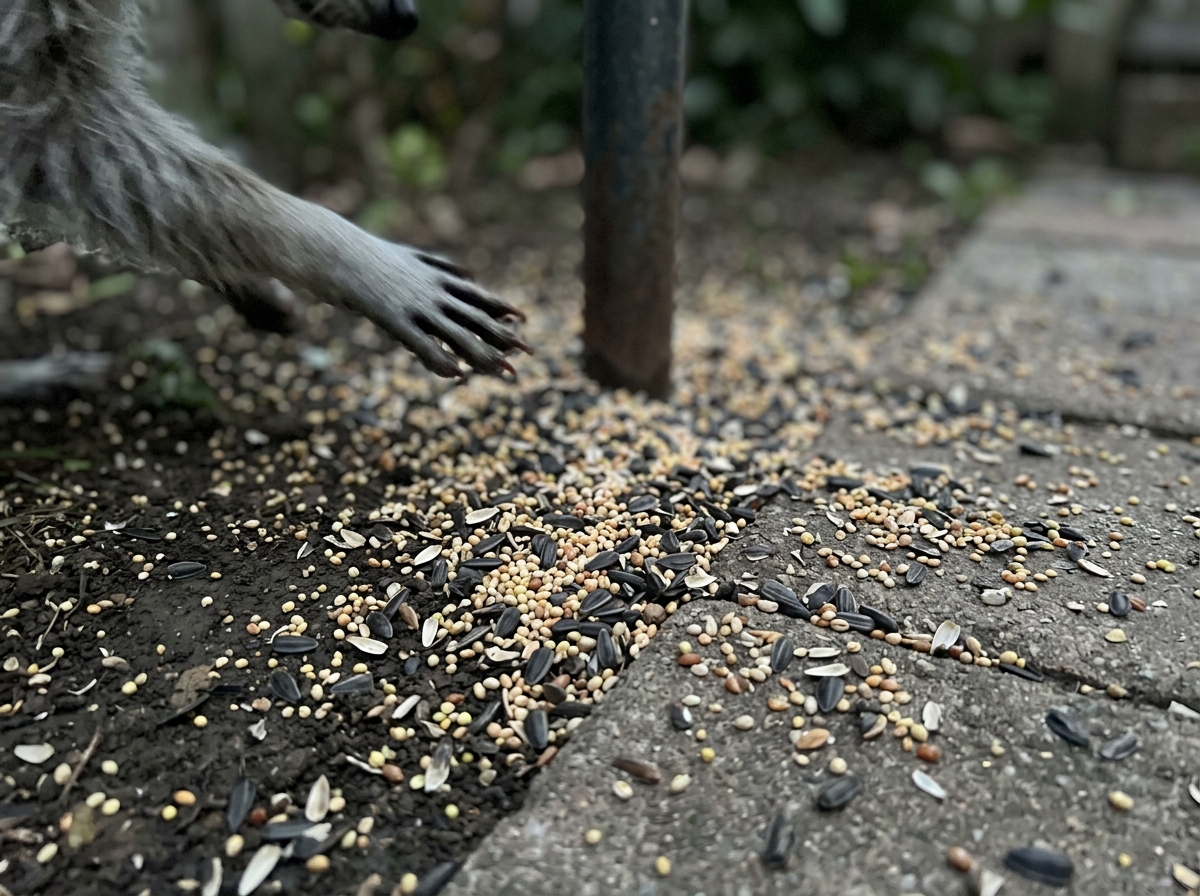
But the biggest draw is not the seed type, it is the spillage. Seed that falls to the ground under a feeder is essentially a free buffet that requires zero effort. Raccoons have nimble, hand-like paws and an excellent sense of smell, so they can locate and sort through ground debris efficiently. Wet or sprouted seed is especially problematic: decomposing organic material gives off a stronger scent, which pulls raccoons in from farther away. Any yard with a feeder that is not managed carefully is going to be an attractive stop on a raccoon's nightly route.
How to tell if raccoons are the culprit (signs at your feeder)
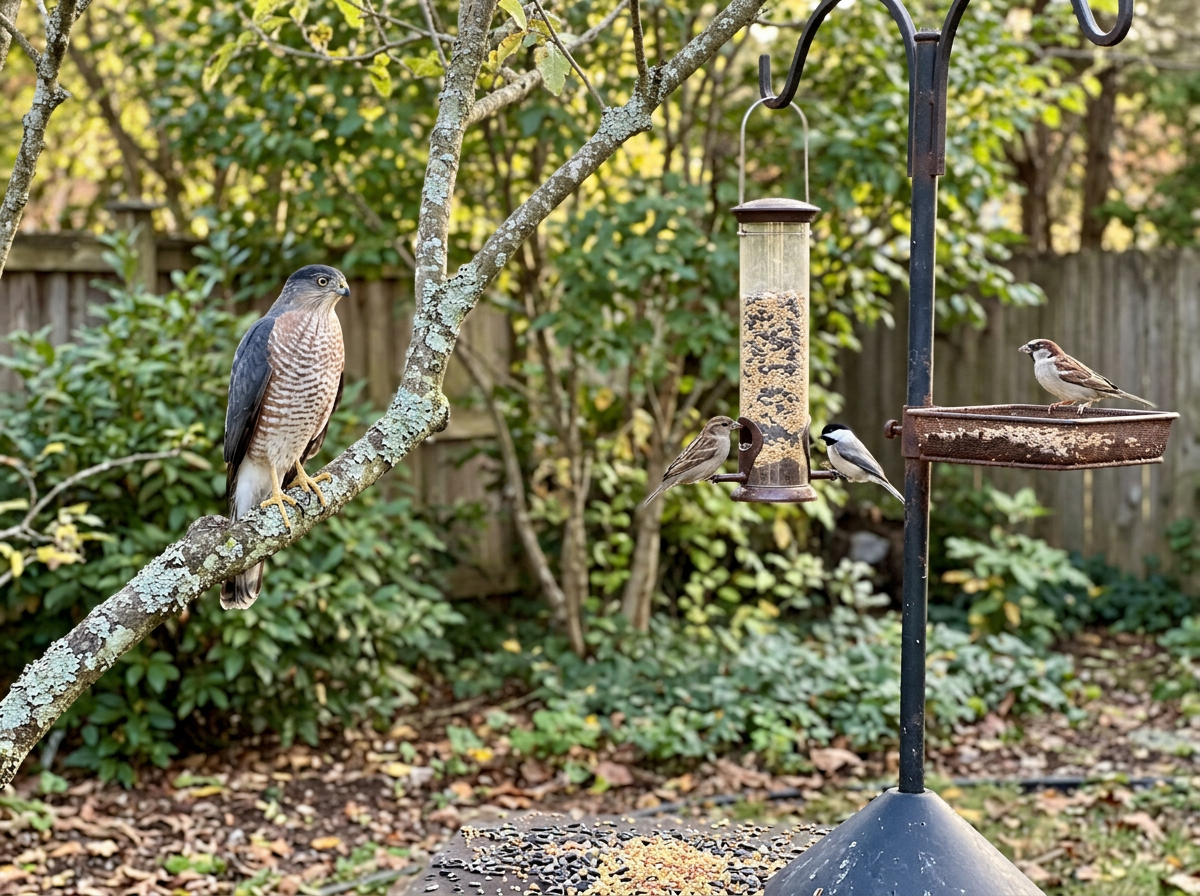
A lot of wildlife visits feeders, including deer, skunks, mice, and opossums, so it is worth confirming raccoons before you start problem-solving. The signs are usually pretty distinctive.
- Feeder knocked down, tipped over, or visibly bent/damaged overnight
- Lid or port covers pried open, latches broken, or hanging parts chewed
- Large amounts of seed missing at once (raccoons eat a lot in one visit)
- Muddy paw prints on the feeder pole, nearby fence, or deck rail (raccoon prints show five fingers and look almost like tiny human hands)
- Feces in or directly under the feeder (raccoons sometimes defecate at feeding sites)
- Disturbed soil or flattened plants around the base of the feeder pole
One thing worth knowing: if raccoons are defecating in or on the feeder, birds will stop using it entirely until it is thoroughly cleaned. If your feeder traffic suddenly drops and you notice droppings, that is your signal to clean before doing anything else. Mice and rats tend to leave smaller, more scattered damage and droppings, while deer leave much larger hoof prints and typically knock things over from a different angle. Skunks mostly work the ground beneath feeders rather than the feeder itself.
Fixes you can do today: remove access and stop spillage
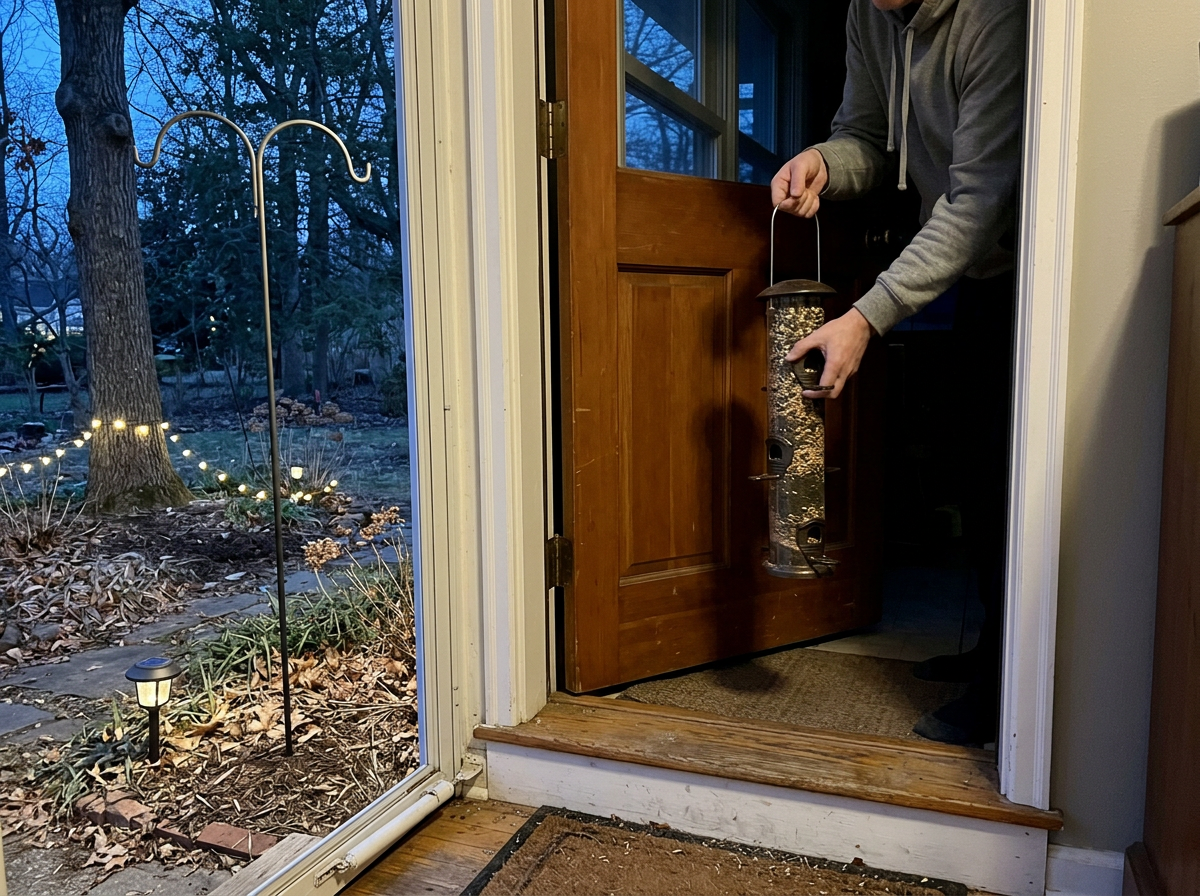
If you are dealing with raccoons right now, these are the highest-impact steps you can take today, before any hardware changes or long-term fixes.
- Bring your feeder inside at dusk. Raccoons are almost exclusively nocturnal. If the feeder is not out there at night, they cannot raid it. Put it back out at sunrise. This single step stops the problem immediately while you set up a longer-term solution.
- Rake up all spilled seed under and around the feeder right now. Use a metal rake or a broom and dustpan. Bag it and put it in a sealed trash can, not an open compost bin.
- Check for wet or clumped seed in the feeder itself. If seed inside the feeder is damp, matted, or starting to sprout, scoop it out completely. Wet seed ferments and smells strong, which actively attracts raccoons (and other wildlife).
- Move or secure your seed storage. If you are storing bird seed in a cloth bag, a cardboard box, or a lidded plastic bin in a garage or shed, raccoons can and will access it. Transfer seed to a metal trash can with a locking lid or a heavy-duty airtight container, and keep it in a locked space if possible.
- If you have a tray-style or platform feeder, remove it temporarily. These are the hardest to raccoon-proof and the easiest for raccoons to access. Switch to a tube or hopper feeder while you implement longer-term changes.
Seed storage, wet/sprouted seed prevention, and cleanup hygiene
Managing your seed supply properly is one of the most overlooked parts of raccoon prevention. Raccoons do not just raid feeders, they investigate anything that smells like food. A poorly stored bag of sunflower seeds in a garage is an invitation.
The best option is a galvanized metal trash can with a locking or clamping lid. Raccoons can chew through plastic bins and pry open standard snap-on lids. Metal with a bungee cord or a locking handle is far more resistant. Keep the container in a garage, shed, or enclosed space rather than on an open porch or deck. Buy seed in smaller quantities so you are not stockpiling large amounts that stay around long enough to attract attention.
Prevent wet and sprouted seed
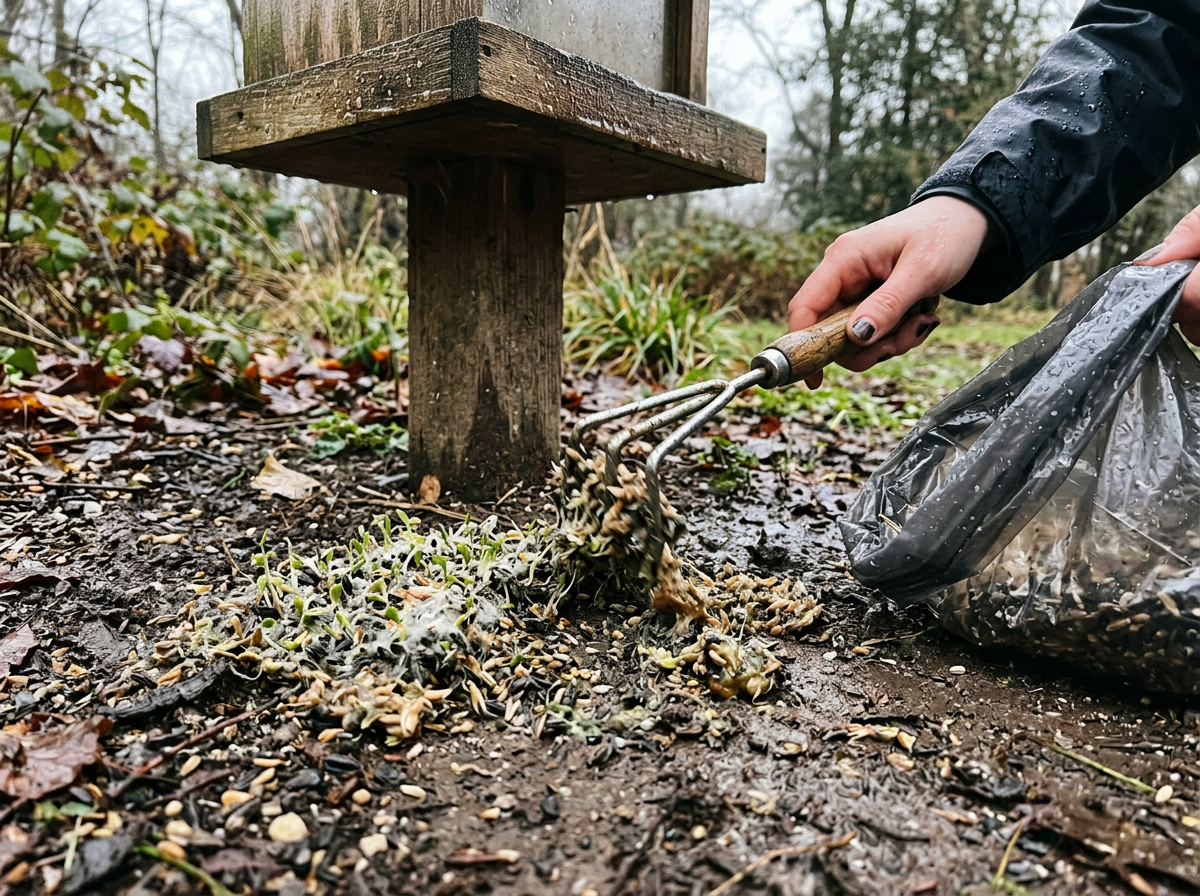
Seed gets wet from rain, morning dew, or birds splashing in a nearby water source. Once it is wet, it clumps, ferments, and starts to grow mold or sprout within a day or two in warm weather. That process produces odors that attract raccoons, skunks, mice, and other wildlife from a much larger radius than dry seed does. Check your feeder after rain events and remove any clumped or damp seed. Feeders with drainage holes or a weather dome (baffle positioned above the feeder) stay drier and need less frequent cleaning.
If you find sprouted or moldy seed on the ground under the feeder, rake it all up, bag it, and dispose of it. For the patch of ground where the seed was sitting, soak the area with a diluted bleach-water solution (about 1 part bleach to 9 parts water) to break down mold and reduce residual odor. Let it dry completely before birds return to that area.
Clean up safely and consistently
This is where health hygiene matters. Raccoon feces can contain Baylisascaris, a roundworm that is a genuine health concern for people and pets. If you find raccoon droppings at or under your feeder, do not handle them with bare hands and do not sweep them in a way that kicks up dust. Wear rubber or latex gloves, use a damp cloth, shovel, or wet-dry vacuum to collect the material, double-bag it, and throw it in the trash. Wash your hands and forearms thoroughly with soap afterward even if you were wearing gloves. Wipe down the feeder with a 10% bleach solution (1 part bleach, 9 parts water), rinse it completely, and let it air dry before refilling. NWF recommends doing a full feeder cleaning at least once a month under normal conditions, more often if you are seeing wildlife activity.
Feeder and placement changes that reduce raccoon raids
Once you have handled the immediate problem, adjusting your feeder setup is how you keep raccoons from coming back. The goal is to make the feeder physically inaccessible without interfering with bird access.
Height and pole placement
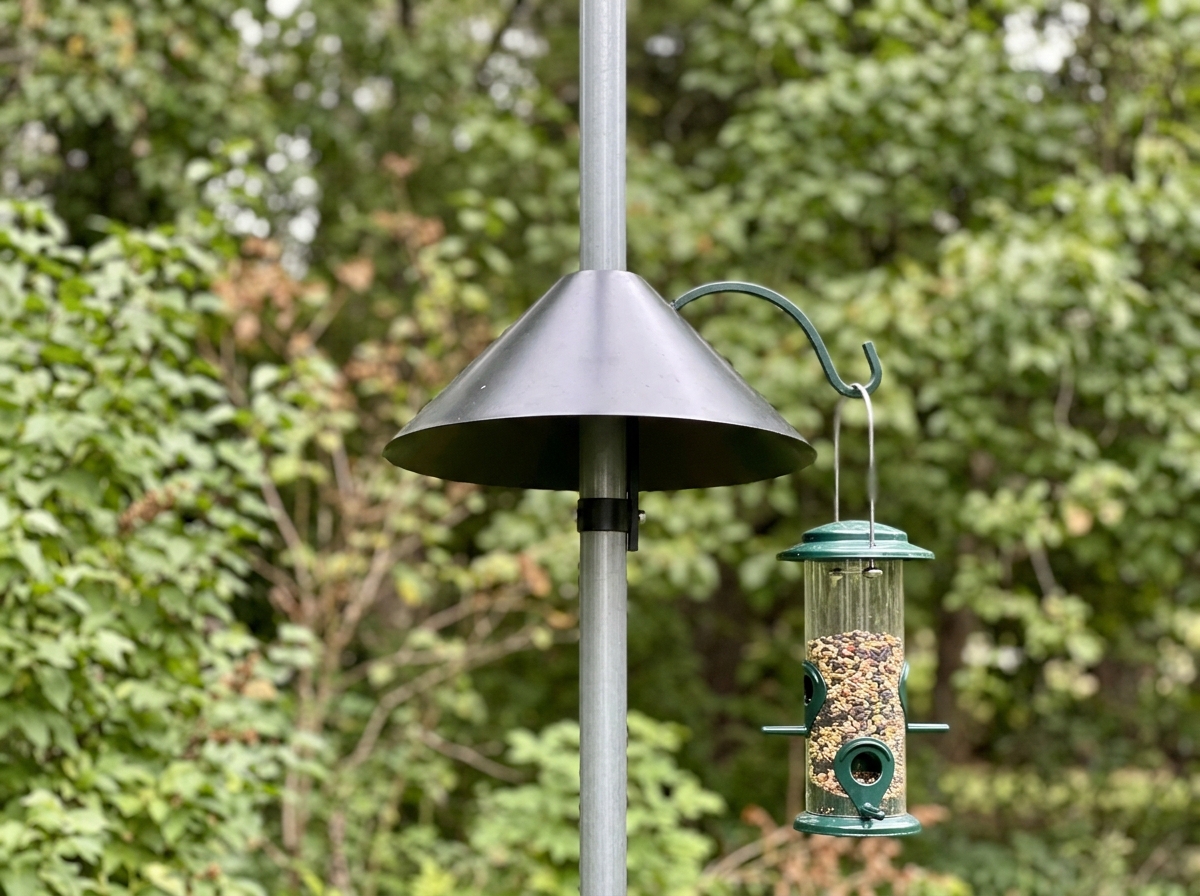
Mount feeders on a smooth metal pole at least 4 feet above the ground. Raccoons are strong climbers, but a smooth metal pole gives them very little to grip. Wood poles, trees, deck railings, and fence posts are all easy for them to scale, so avoid using those as mounting points if raccoons are a problem. The feeder should also be at least 8 to 10 feet away from any surface a raccoon could jump from: a deck, fence, roof overhang, or large tree branch.
Install a baffle (this is the most effective single hardware fix)
A baffle is a cone-shaped or cylinder-shaped physical barrier that blocks climbing animals from reaching the feeder. UNL Extension recommends placing a cone baffle on the pole below the feeder, positioned so that a raccoon climbing the pole hits the baffle and cannot get past it. For a cone-style baffle to work against raccoons (which are larger and more determined than squirrels), it should be at least 17 inches in diameter. A stovepipe or tube-style baffle encircling the pole works well too. Make sure the baffle is mounted high enough off the ground (at least 4 feet) that a raccoon cannot simply reach around or above it by standing on the ground.
Choose the right feeder style
Tube feeders with small ports are harder for raccoons to access directly because their paws are too large to fit inside the feeding ports comfortably. Hopper-style feeders with a locking or weighted lid add another barrier. Weight-sensitive feeders (which close ports when a heavier animal lands on the perch) are marketed for squirrels but also deter small raccoons. Platform and tray feeders are the worst choice if raccoons are a problem because they provide an open surface and no mechanical barrier.
Control ground spillage with the right seed
Seed mixes with a lot of millet, milo, or cracked corn produce more ground spillage because birds toss what they do not want. Switching to shelled sunflower seeds, sunflower chips, or hulled seed mixes reduces the amount of debris that falls and accumulates under the feeder. Less ground material means less attraction for all ground-foraging wildlife, not just raccoons.
Ongoing prevention: raccoon-proofing and bird-safe safety notes
Getting raccoons to stop visiting is not a one-and-done task. It requires keeping a few consistent habits in place.
- Bring feeders in every night if you do not have a fully baffled, pole-mounted setup. This is the simplest and most effective long-term habit.
- Rake under feeders at least twice a week, more often during wet or warm periods when seed sprouts or molds quickly.
- Never leave pet food outside at night. Raccoons that find pet food will also investigate nearby feeders.
- Check the area around your feeder setup for easy access routes: overhanging branches, trellises, fences within jumping distance. Trim branches back at least 10 feet from the feeder and remove structural access points where possible.
- Do not use live traps without checking your local regulations first. Relocating raccoons is restricted or prohibited in many states and does not solve the underlying attraction problem.
- Avoid using sticky repellents or harmful deterrents on feeders. Many of these trap and injure birds.
- Do not feed raccoons intentionally or let them get comfortable in your yard. UC IPM warns that habituation makes urban wildlife conflicts worse over time.
One myth worth busting: motion-activated lights and sprinklers work in the short term but raccoons adapt to them quickly, sometimes within a week. Physical exclusion (baffles, locked storage, bringing feeders in at night) is the only strategy that holds up long term.
If you are also dealing with other backyard wildlife raiding your seed, the same core principles apply: remove easy ground food, secure your storage, and consider what your feeder setup is broadcasting to the neighborhood at night. Skunks, mice, and deer all respond to the same attractants that pull raccoons in, so solving the raccoon problem usually reduces visits from other animals at the same time.
| Step | What it solves | When to do it |
|---|
| Bring feeder in at dusk | Stops nocturnal raids immediately | Every night until setup is fixed |
| Rake up spilled seed | Removes ground-level food attractant | Every 2 to 3 days (daily in wet weather) |
| Remove wet or sprouted seed | Eliminates strong odor attractant | After every rain event or weekly check |
| Store seed in a metal locking container | Prevents storage raids | One-time setup, ongoing habit |
| Install a pole baffle (17+ inch cone) | Blocks climbing access to feeder | One-time hardware fix |
| Mount feeder on smooth metal pole at 4+ feet | Removes easy climbing surface | One-time setup change |
| Clean feeder with 10% bleach solution | Removes feces, mold, and odor | Monthly minimum, more if wildlife active |
| Switch to hulled or shelled seed mix | Reduces ground spillage | Ongoing seed purchasing choice |
The bottom line: raccoons will eat bird seed every time they can access it, and they will keep coming back as long as the reward is there. (If you’re wondering, do rabbits eat bird seed? it’s a different question, still worth checking before you adjust your setup.) But this is a solvable problem. Bring the feeder in at night, clean up spillage consistently, store your seed properly, and get a baffle on your pole. Do those four things and you will see a significant drop in raccoon activity within a week or two. do bears eat bird seed do bears eat bird seed