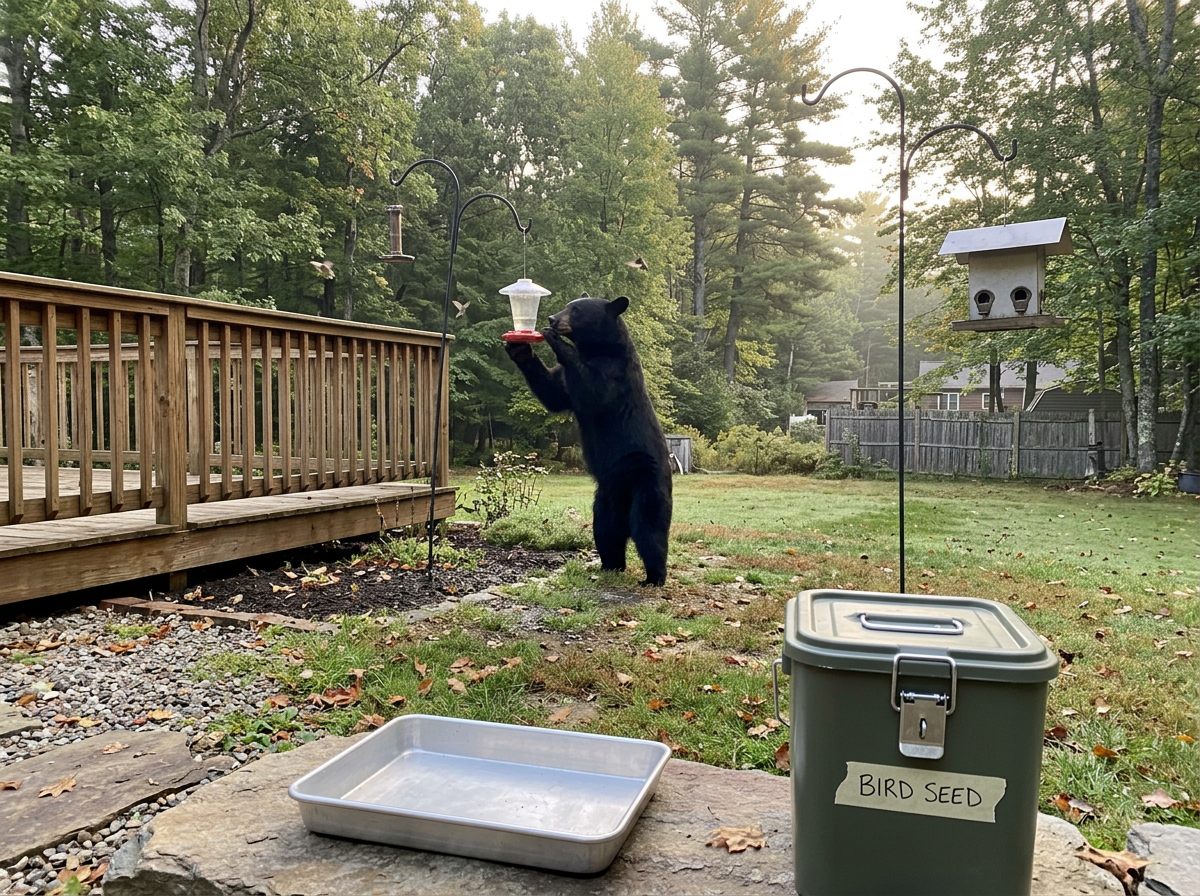
Yes, mice will absolutely eat bird seed, and they are very good at finding it. If you have a feeder up, a bag of seed in the garage, or spilled hulls on the ground, mice will eventually show up. This is not a rare edge case. It is one of the most common reasons people start seeing mice around their yard and, eventually, inside their home. The good news is that with a few targeted changes to how you store seed and set up your feeder, you can keep birds fed and mice out of the picture.
Will Mice Eat Bird Seed? How to Stop Them Fast

Maya Collins
23 Mar 2026
Do mice eat bird seed? What to actually expect in your yard
Mice eat bird seed eagerly. House mice and deer mice are both opportunistic foragers, and bird seed is essentially a buffet: calorie-dense, easy to find, and reliably restocked. If you have a feeder, you have a food source that can sustain a mouse population year-round. What starts as a few mice visiting at night can become a much bigger problem quickly. The wildlife damage management research is clear that increasing food availability causes rapid growth in rodent populations, and mice are among the species most directly affected by bird feeder access.
In practice, you will most likely notice mice at ground level first. They pick up what birds drop, forage under feeders after dark, and can chew through seed bags and thin plastic storage containers. If you have a tray or platform feeder low to the ground, mice will climb right into it. They are less deterred than squirrels by height alone, since they can squeeze through very small gaps and climb rough surfaces easily.
What makes bird seed so attractive to mice
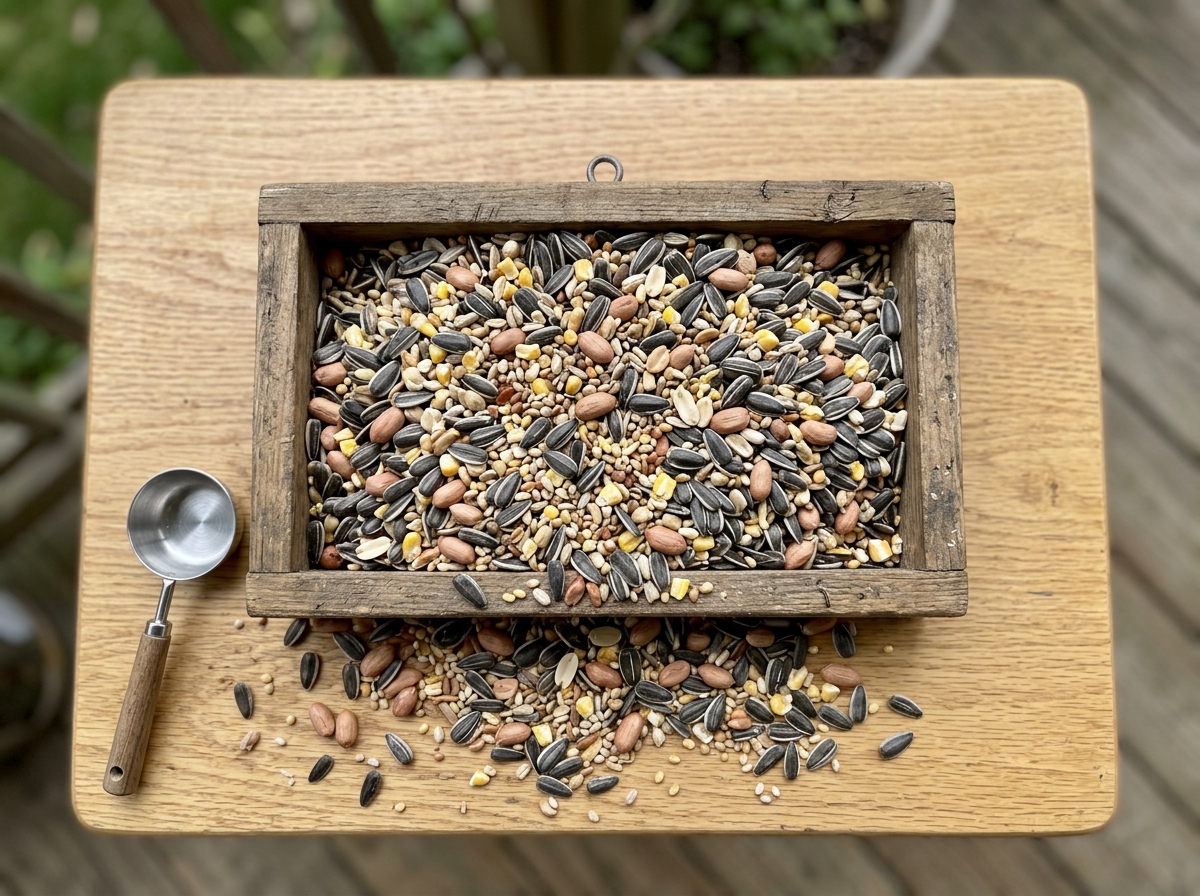
Bird seed is exactly the kind of food mice prefer: small, dry seeds that are easy to carry and cache, high in fat and calories, and available in large quantities. A few specific factors make things worse.
- Sunflower seeds and peanuts: These are the highest-calorie options in most seed mixes, and mice will prioritize them over everything else. Research from wildlife management sources notes that rodents will sometimes knock seed out of a feeder entirely just to get to the sunflower kernels at the bottom.
- Spilled seed and hulls on the ground: Seed debris under a feeder is the single biggest attractant. Mice rarely need to access the feeder itself when there is reliable spillage below it.
- Low or ground-level feeders: Platform feeders, trays, and any feeder hanging less than about four to five feet off the ground are easy targets. Mice are agile climbers and can scale wooden posts and rough surfaces.
- Seed stored in bags or thin containers: A paper bag or a flimsy plastic bucket is not a barrier to mice. They chew through both quickly.
- Wet or rotting seed: Seed that has gotten wet and started to decompose or sprout is softer and even easier to eat. It also attracts more pest activity overall.
Compared to other wildlife visitors like deer or rabbits, mice are harder to exclude simply because of their size and nocturnal habits. do rabbits eat bird seed
Can mice eat bird seed safely? (The hygiene and nuisance reality)
Bird seed itself is not toxic to mice, and eating it will not harm them directly. Mice harm your seed supply, your feeder, and potentially your health. Mouse droppings, urine, and saliva contaminate whatever they come in contact with. At a bird feeder or storage area, that means the seed birds eat can become a disease vector.
Hantavirus is the most serious concern. The CDC confirms it spreads through contact with infected rodent urine, droppings, or saliva, including by inhaling contaminated particles. People who handle rodent-contaminated materials are at elevated risk. Salmonella is another documented risk from rodent-contaminated bird feeding areas. Neither of these is a reason to stop feeding birds, but they are real reasons to treat a mouse problem at your feeder as a hygiene issue, not just a nuisance.
The nuisance side is significant too. Mice chew through storage containers, contaminate large quantities of seed quickly, and their presence near your home raises the risk of them moving indoors, especially in fall and winter when temperatures drop.
Can pet mice eat bird seed?
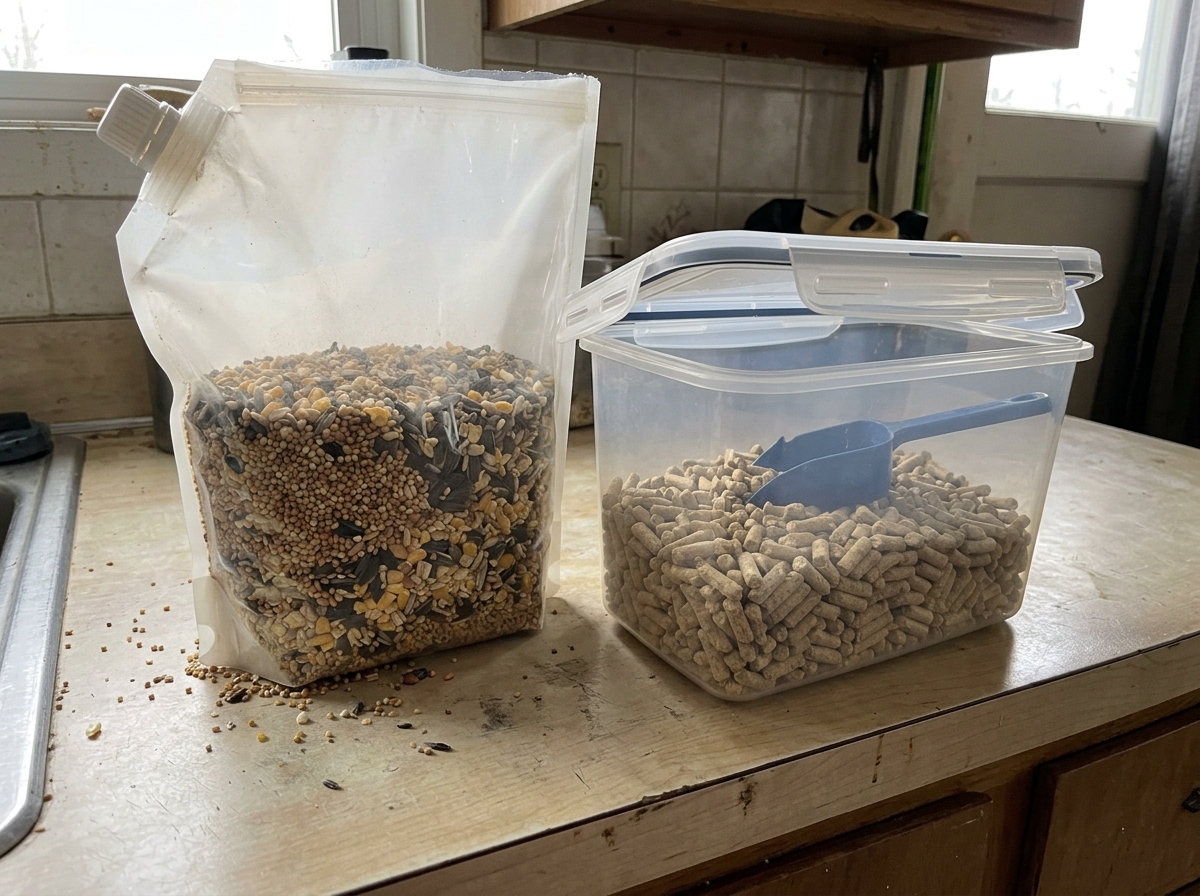
This comes up a lot, and the short answer is: pet mice can physically eat bird seed without being immediately harmed, but you should not use it as their primary food. The RSPCA is direct about this: seed mixes are not a good diet choice for pet mice because mice will selectively pick out their favorite high-calorie pieces (usually sunflower seeds) and ignore the rest, leading to nutritional imbalances. Minnesota Pocket Pet Rescue echoes this, stating plainly that seed mix food should not be used because it is often missing vital nutrients.
A formulated pellet or block diet designed specifically for mice gives them the balanced nutrition they need. You can offer the occasional seed as a treat, but relying on bird seed as a staple means your pet mouse is likely getting too much fat and not enough of the vitamins and minerals they require. If you already have bird seed on hand and are wondering whether to supplement with it, keep it minimal and infrequent.
How to stop mice from getting to your bird seed
Prevention is much easier than dealing with an established mouse problem. These steps address the three main entry points: stored seed, the feeder itself, and the ground around it.
Store seed properly
- Use a metal or heavy-duty hard plastic container with a tight-fitting lid. Mice chew through paper bags, cloth sacks, and thin plastic bins with ease.
- Store seed in a cool, dry, dark location. Moisture encourages mold and sprouting, which both attract pests and degrade seed quality faster.
- Buy only as much seed as you will use in two to four weeks. A smaller, fresher supply reduces the size of the target.
- Do not leave open bags inside a garage or shed without a secondary container. Even a brief gap in storage discipline gives mice a foothold.
Set up your feeder to limit access
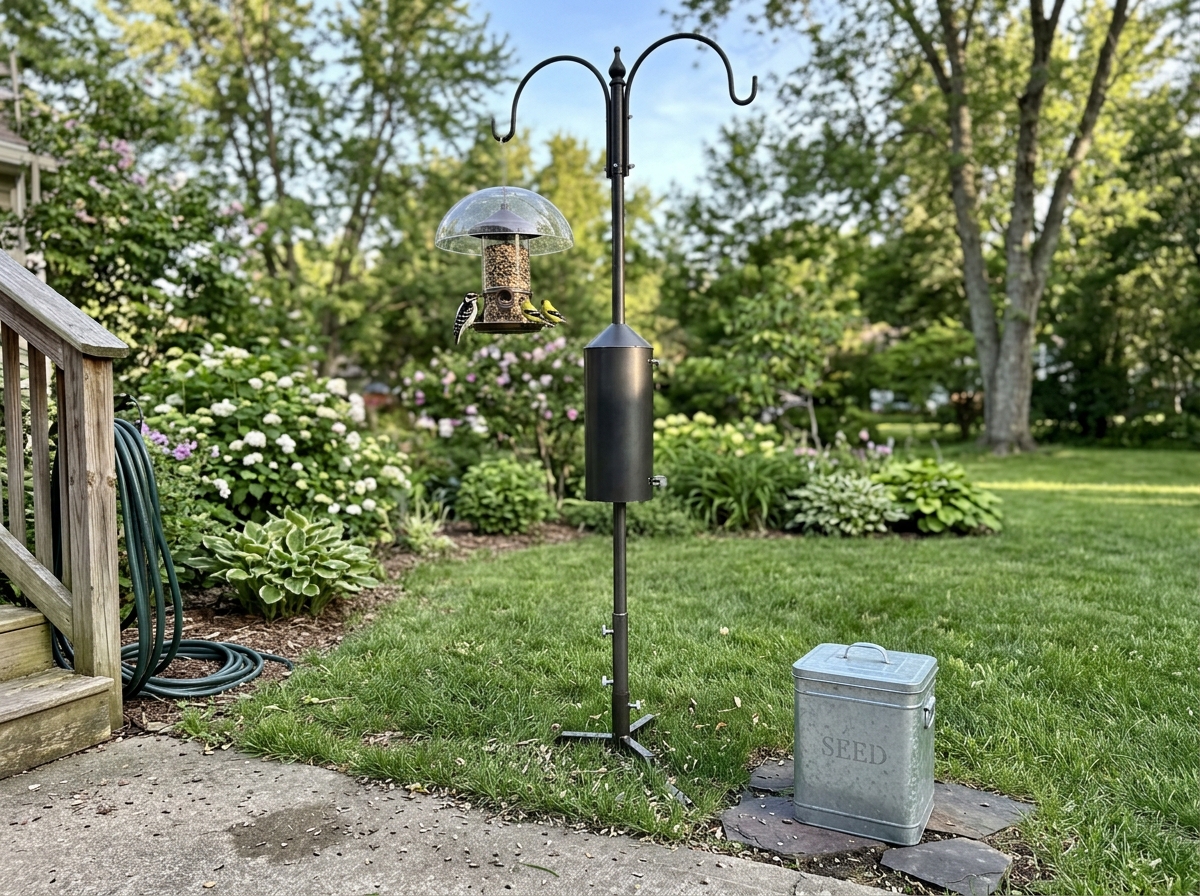
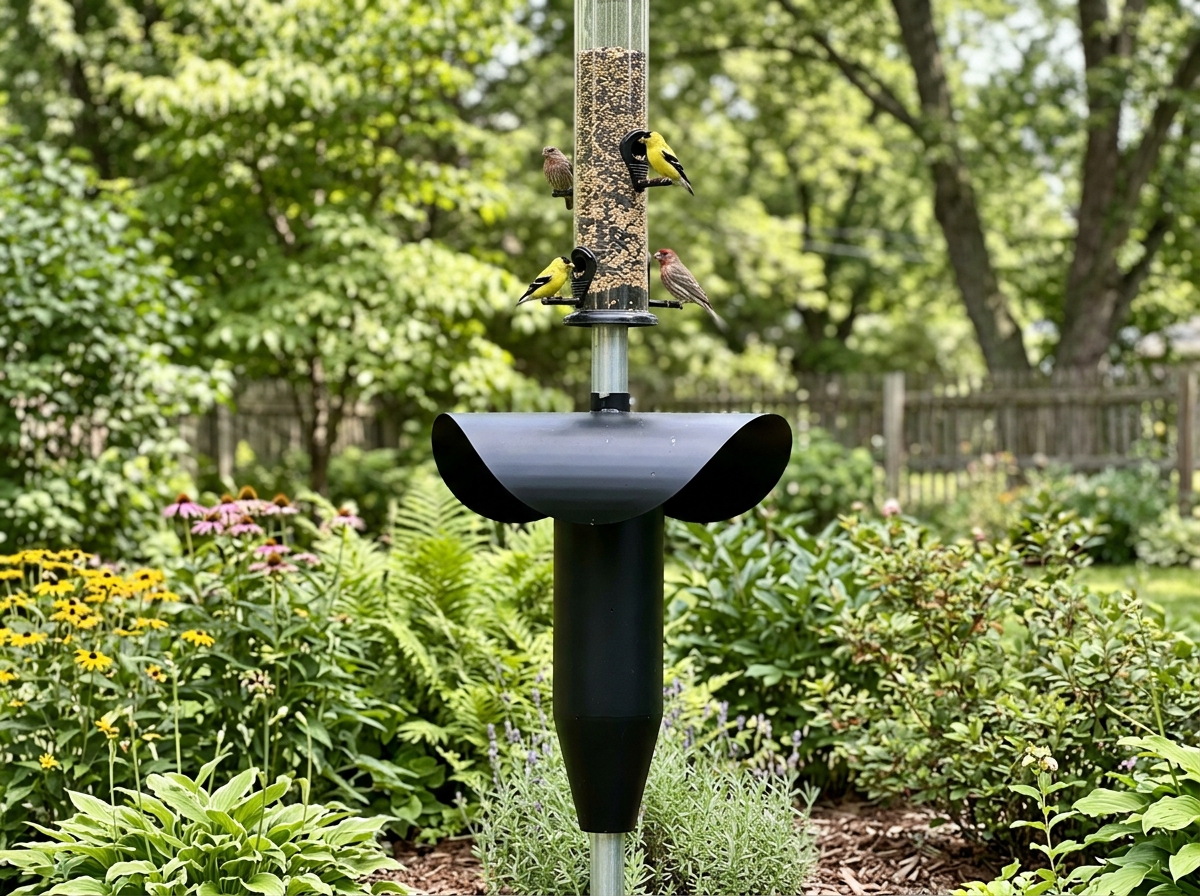
- Mount feeders on a smooth metal pole at least four to five feet off the ground. Rough wooden posts are easy to climb; smooth metal poles are much harder.
- Add a baffle below the feeder. A cone-shaped or cylindrical baffle on the pole interrupts the climbing path.
- Use a feeder designed to catch or reduce spillage. Some tube feeders have trays that catch fallen seed and can be removed and cleaned, rather than letting seed pile up on the ground.
- Avoid ground-level or low platform feeders if you already have a mouse problem. Switch to a hanging tube or hopper feeder at height.
- Keep the feeder away from fences, overhanging branches, and structures that mice can use as a launch point to bypass the pole.
Manage what lands on the ground
- Sweep or rake up spilled seed and hulls daily or every other day, especially during active mouse season (fall through early spring).
- Consider switching to no-waste seed mixes or hulled sunflower seeds, which leave far less debris on the ground.
- Do not let seed sit on the ground overnight. That is when mice are most active.
- King County Public Health specifically recommends arranging feeders so that seed in trays cannot be reached by rodents, and removing ground debris as a core prevention step.
What to do if mice are already showing up
If you are already seeing mice at your feeder or finding droppings in your seed storage area, act on this in order: stop the food access, clean up properly, and then set up prevention for the long term.
- Remove the feeder temporarily. If mice are actively using the feeder area, taking it down for one to two weeks removes the reward and discourages return visits. This is a short-term step, not a permanent one.
- Transfer all seed to sealed metal containers immediately. Any seed in open or soft packaging should be inspected for contamination and discarded if droppings or urine signs are present.
- Do NOT sweep or vacuum droppings dry. The CDC is explicit: dry-sweeping or vacuuming aerosolizes particles that can carry hantavirus. Instead, put on disposable gloves and a mask before doing anything.
- Wet down the contaminated area with a bleach solution (1.5 cups of household bleach per 1 gallon of water). Let it soak for five minutes before wiping up with paper towels. Bag everything and dispose of it.
- Disinfect the feeder and any surfaces mice contacted using the same bleach solution. The Cornell Lab's Project FeederWatch recommends cleaning feeders about every two weeks under normal conditions, and more often when there is known contamination or during warm, damp weather.
- Rake and bag all seed debris from the ground around the feeder. Dispose of it in a sealed bag, not a compost pile.
- Rehang the feeder on a proper pole with a baffle once the area is clean and your storage is secured.
- Set snap traps or other rodent control around the perimeter of the area if the problem is persistent. Place them in covered, protected spots away from where birds land.
Seed troubleshooting that cuts pest activity
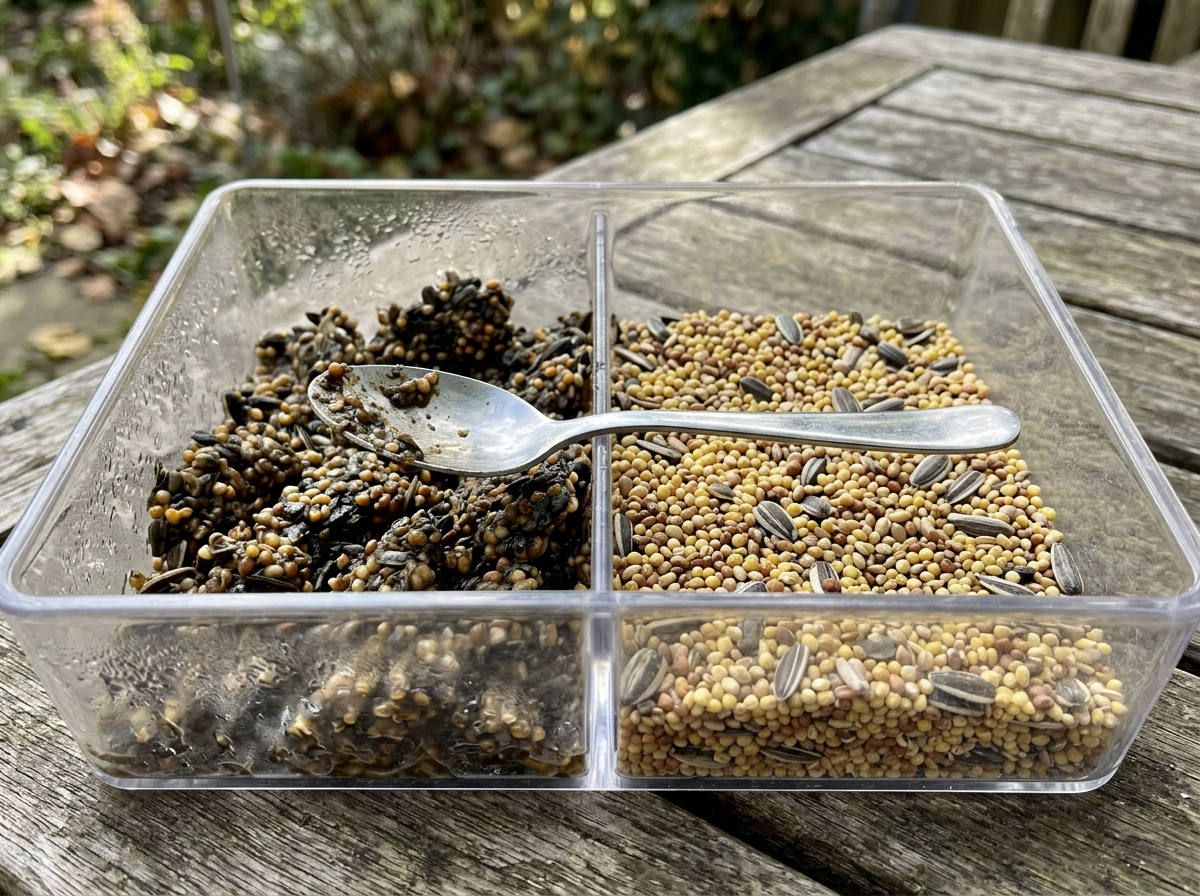
A lot of mouse problems at feeders come down to seed condition and handling habits that most people do not think about until there is already a problem. Here are the most common issues and what to do about each.
| Problem | Why it attracts mice | Fix |
|---|---|---|
| Wet or clumped seed in the feeder | Damp seed is softer, smells more strongly, and can begin to ferment, drawing more pest activity | Discard wet seed immediately; clean and dry the feeder before refilling; add a weather guard or dome above the feeder |
| Sprouted seed on or under the feeder | Sprouted seed is a sign of persistent moisture and is easier for mice to eat; it also signals a regular food source | Rake up sprouts and any seed on the ground; switch to hulled seed to reduce what can sprout |
| Moldy seed in storage | Mold indicates moisture in your container; mice are attracted to the smell and will chew through to access it | Discard moldy seed completely; dry the container; store in a cool, dry location with a sealed lid |
| Large open seed trays | Wide, low trays hold more seed but are easier for mice to climb into and sit in overnight | Switch to smaller catch trays you can empty at dusk, or remove trays entirely |
| Seed left in feeder over winter | Cold weather reduces bird activity, leaving seed sitting longer; mice become more food-motivated in winter | Reduce fill quantities in low-use periods; check feeders every few days and remove old seed before refilling |
One regional note worth keeping in mind: if you are in the Pacific Northwest, upper Midwest, or Northeast, fall and winter are the highest-risk periods for mice moving from outdoor feeder areas into homes. Deer mice in particular are the primary carriers of hantavirus in North America, and they are common in rural and suburban settings where bird feeders are most used, so yes, deer eat bird seed when they can access it. Tightening up your feeder and storage setup before temperatures drop in September or October is the smartest timing.
The bottom line is straightforward: mice love bird seed, they will find it if given any access, and the combination of spilled seed on the ground plus improperly stored seed in bags is the fastest way to end up with a serious rodent problem. Fix the storage, clean up the spillage, get the feeder off the ground on a baffled pole, and you can keep feeding birds without feeding mice.
FAQ
If mice eat bird seed, will birds still be safe to eat the seed later?
Birds can still eat from the feeder after mice visit, but you should treat the area as contaminated. Remove the seed and droppings, wash the feeder with hot soapy water, and let it fully dry before refilling. Avoid “topping off” old seed, because residue and mixed-in soiled seed can keep contamination around.
How can I tell whether the “seed problem” is mice or something else like rats or squirrels?
Look at size and location patterns. Mice commonly forage under the feeder and leave small droppings, often near entry points like fences, shrubs, or the feeder pole. Rats tend to leave larger droppings and more gnawing along walls and low ledges, while squirrels usually cause seed to disappear in larger chunks and leave more obvious claw marks or nesting activity in trees.
Do mice prefer specific types of bird seed?
Many seed mixes are selectively eaten, and sunflower seeds are a common favorite because they are calorie-dense. If you keep a mix, you may see fewer leftovers but still have ongoing mouse activity, since they can cache and return for high-value pieces. Consider using a seed type that is less appealing and use smaller refills to reduce leftover waste.
What’s the fastest safe cleanup method for mouse-contaminated seed and droppings at a feeder?
Wear gloves and use a disinfectant safe for the surface, remove visible droppings first, then clean. Bag and discard contaminated seed rather than composting it. Because particles can become airborne when disturbed, avoid aggressive sweeping or dry brushing, especially around dry seed dust.
Should I keep using the feeder while I’m dealing with mice?
Temporarily pausing feeding is often the quickest way to stop the food source. If you must keep feeding, reduce it to the smallest amount, clean and refill frequently, and focus on preventing access beneath and around the feeder. Once you remove the food access, expect mice activity to drop over days, not instantly.
Will a feeder on a pole but with a low clearance still attract mice?
Yes. Mice can climb rough surfaces and squeeze through small gaps, and they can reach platforms that are too close to the ground. Use a baffled pole plus enough clearance so no part of the feeder is reachable from nearby branches, fences, or siding. Also check for “bridge points” like stacked firewood or planters near the pole.
Are there seed-storage habits that cause mice even when the bag is indoors?
Common mistakes are storing seed in thin plastic containers, leaving bags on the floor, or storing seed near clutter that creates hiding spaces. Aim for airtight, hard-sided containers, keep them off the ground, and store them away from wall edges where mice can travel. If the garage has gaps under the door, seal them so indoor storage still stays protected.
Will using mouse traps work if the only attraction is the feeder?
Traps can help, but the food source must be removed or reduced for results to last. Place snap traps along likely travel routes (behind the feeder structure, near corners, and where droppings appear), not directly in the open. Check frequently and dispose of carcasses safely, since you still have contamination risks from handling.
Is it okay to let a pet mouse or hamster eat bird seed occasionally?
Occasional seed is usually fine, but it should not be the main diet. Seed mixes often have an unbalanced fat and nutrient profile because animals selectively eat the best pieces. If you are switching diets, change gradually and prioritize a formulated pellet or species-appropriate diet for the animal’s nutritional needs.
What time of year should I be most proactive about feeder and storage changes?
In many regions, risk rises before winter when mice look for stable food indoors. A good decision aid is to tighten storage and feeder setup before temperatures drop in early fall, then keep the feeder on a strict cleanup and small-refill schedule through the high-risk months.
Next Article
Do Bears Eat Bird Seed? Yes, and How to Stop It
Yes, bears eat bird seed, attracted by easy calories and spills. Learn signs and steps to secure feeders today.