Why robins often ignore bird seed (myths vs real reasons)
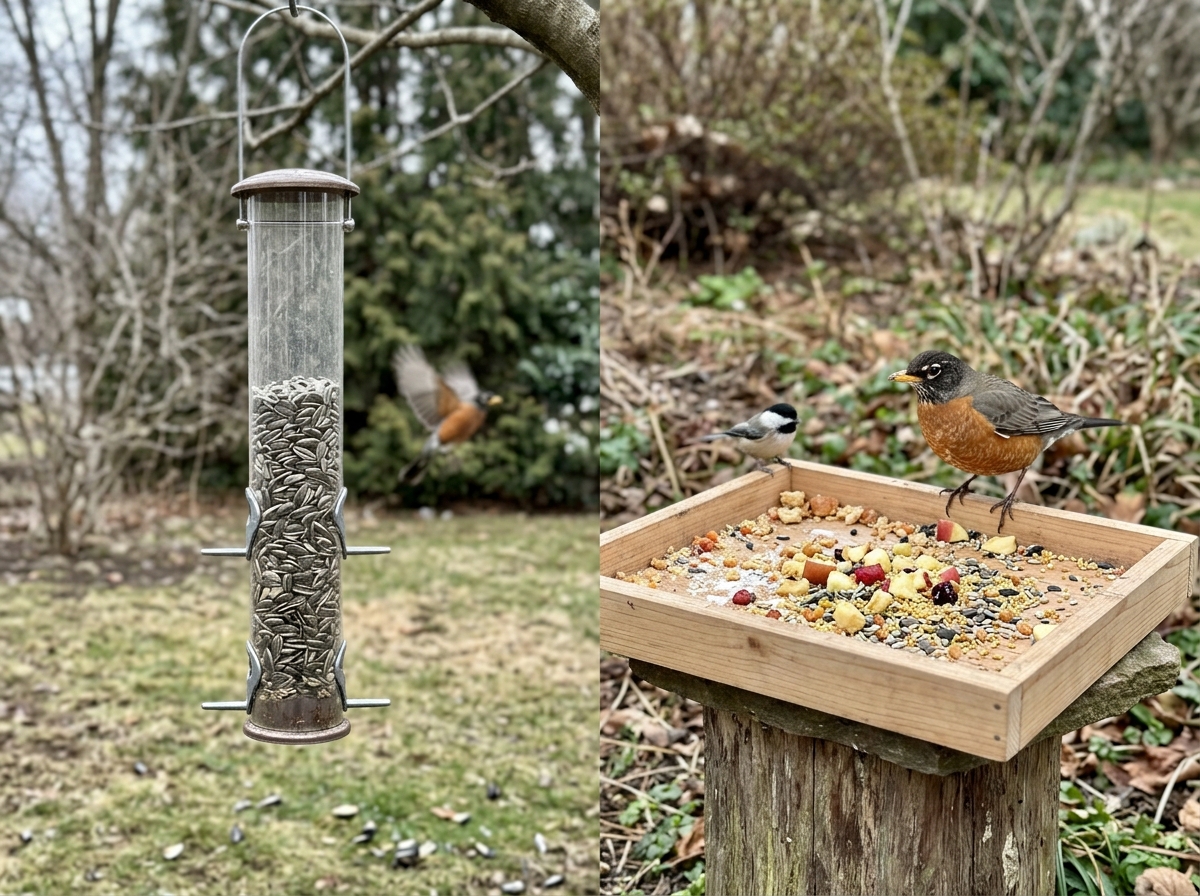
The most common myth is that robins are picky or skittish birds. They are not. The real reason robins ignore most seed setups comes down to three things: the wrong food type, the wrong feeder design, and the wrong placement. Robins are ground foragers. They hop across open lawns, listen for earthworms, and scan for berries on low shrubs. A tube feeder mounted five feet off the ground filled with nyjer seed is about as useful to a robin as a vending machine is to a deer.
Another myth worth clearing up: robins leave in winter because they hate cold weather. That is not quite right. Robins shift behavior based on food availability, not temperature. When the ground freezes and worms become inaccessible, robins flock together and move to wherever berry-producing shrubs and trees are fruiting. They may still be in your region, just not in your backyard because your backyard does not have what they need. Understanding this is the key to actually attracting them.
Here is a quick breakdown of the real reasons robins skip typical seed setups:
- Seed is not a natural part of their diet, so they are not wired to seek it out the way finches or sparrows are
- Tube and hopper feeders physically block ground-feeding birds from accessing food comfortably
- Most standard seed blends (sunflower, nyjer, safflower) do not resemble anything robins eat in the wild
- Robins rely heavily on visual and auditory cues to locate food on open ground, not on visiting fixed feeders
- In winter, their attention shifts almost entirely to fruit and berry sources, making seed setups even less relevant unless positioned and supplemented correctly
What bird seed robins like (types to offer and what to avoid)
If you want robins to take seed, the closest match to their natural diet is fruit-based or softer seed options rather than hard-shelled seed. Think of it less as "bird seed" in the traditional sense and more as supplemental soft food. Robins will most readily eat mealworms (dried or live), soaked raisins, chopped fresh fruit like apples or berries, and cracked corn. Among more traditional seed products, cracked corn is the one most likely to get a look from a robin because it is soft, open, and easy to eat without the heavy hull of sunflower seeds.
If you are buying a commercial blend specifically to attract robins, look for mixes that include cracked corn and dried fruit pieces. Avoid blends that are heavy on nyjer (thistle), safflower, or whole sunflower seeds. Robins have no real use for those and will ignore them. Suet cakes with a fruit or berry base can also work, especially in winter, as long as you use an open or flat suet holder rather than a wire cage feeder that a robin cannot cling to.
| Food Type | Robin Appeal | Notes |
|---|
| Dried/live mealworms | High | Closest to their natural invertebrate diet; works year-round |
| Soaked raisins or dried fruit | High | Mimic wild berries; soak raisins in water first to soften |
| Cracked corn | Moderate | Accessible and soft; best on a flat tray or ground |
| Fruit-based suet cake | Moderate | Use flat/open holder, not a cage feeder |
| Whole sunflower seeds | Very low | Hard shell, not a natural food; robins typically ignore |
| Nyjer (thistle) seed | None | Finch food; robins will not eat it |
| Safflower seed | Very low | No match to natural robin diet |
| Millet (white proso) | Low | Occasionally taken from ground; not a target food |
Winter feeding: will behavior change and what to set out
Winter is actually the season when your feeding efforts are most likely to pay off with robins. When the ground is frozen or snow-covered, robins cannot pull earthworms from the soil. Their diet pivots almost entirely to fruit and berries, and they form loose flocks that travel between productive food sources. If you can be one of those productive food sources, robins will find you.
The single best thing you can do in winter is plant or maintain native berry-producing shrubs like holly, winterberry, dogwood, or crabapple. These will outperform any feeder setup. But if you want to supplement with food you actively put out, focus on these options for winter specifically:
- Halved apples or pears placed directly on a flat tray or the ground
- Raisins soaked in warm water for about 20 minutes, then drained and placed on an open tray
- Dried cranberries or blueberries (unsweetened, no added salt or flavoring)
- Fruit-based suet on a flat platform
- Dried mealworms if you want to add a protein element alongside the fruit offerings
One regional note worth mentioning: if you are in a warmer southern climate, robins may actually be more visible in your yard in winter than at other times of year, because flocks from farther north move south as temperatures drop. In those regions, a well-stocked fruit tray in December through February can draw impressive numbers of robins. In colder northern areas, your resident robins may move on entirely, but a well-planted yard with berry-producing trees can still attract traveling flocks passing through.
How to offer seed so robins can access it (tray and ground setup)
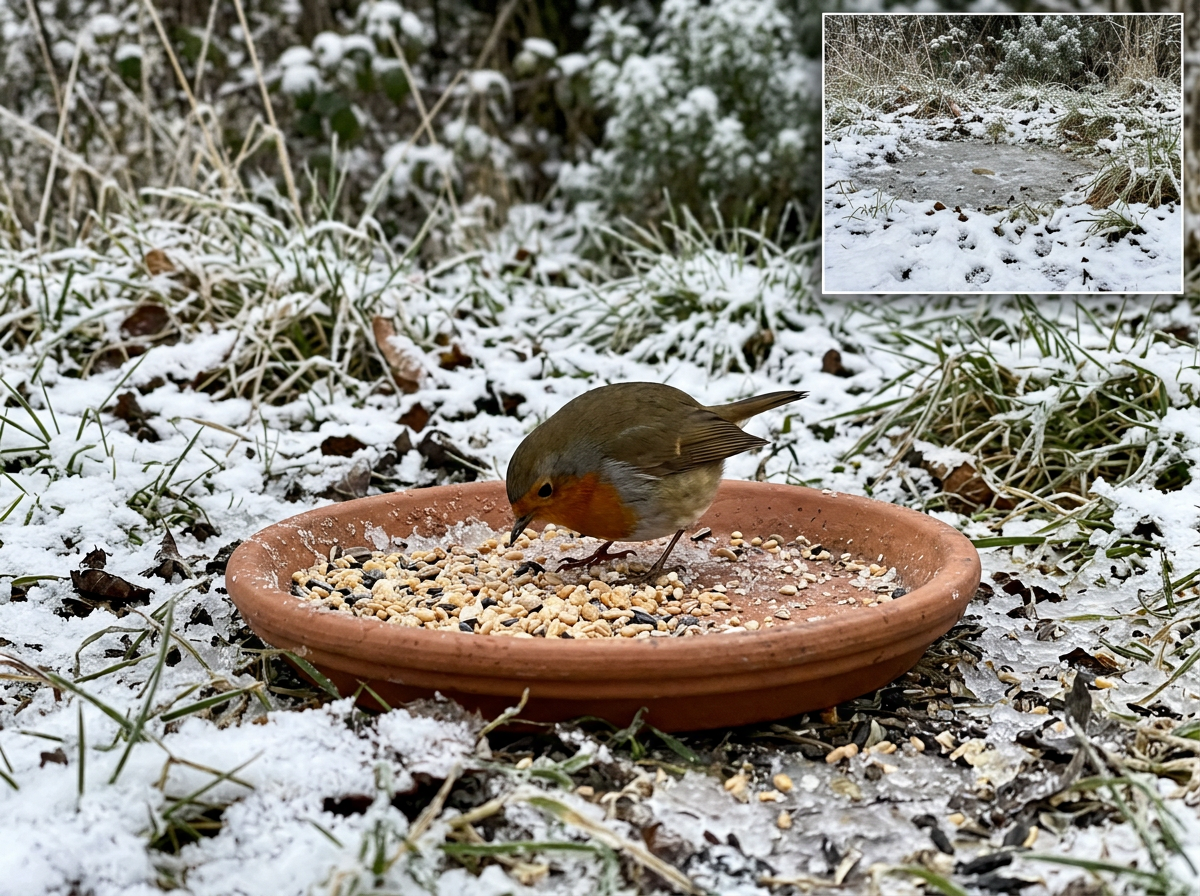
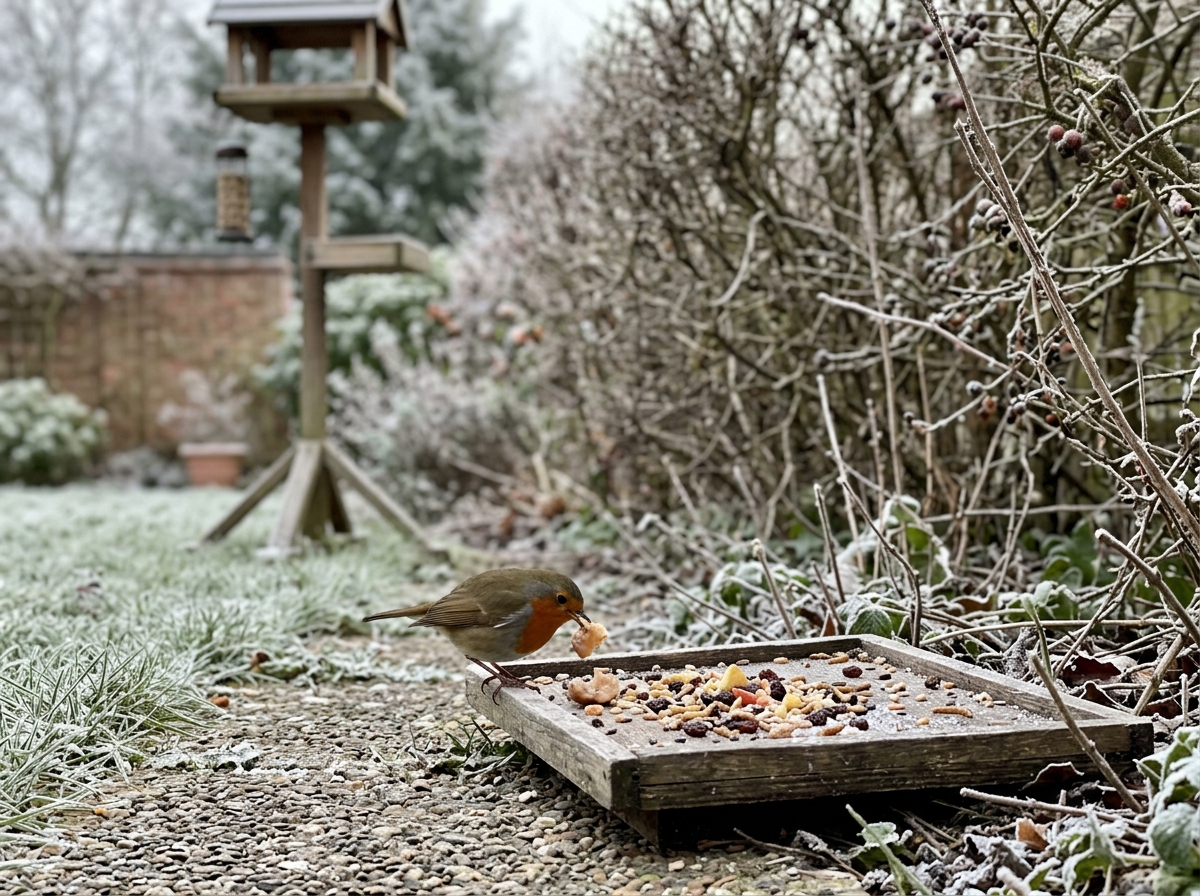
This is where most people go wrong. Even if you have the right food, a tube feeder or a small hopper feeder will not work for robins. Robins need flat, open space to land, look around, and pick food up the way they would forage on a lawn. The two setups that actually work are a ground-level feeding area and a platform (tray) feeder.
Ground-level feeding
Clear a patch of open ground or lay a large, flat tray directly on the ground. Scatter your food in an open area where robins can see the space from a distance before landing. Avoid placing food right next to dense shrubs or fences where predators can hide. A light dusting of cracked corn, some fruit pieces, and a small pile of soaked raisins spread across a 12 to 18 inch flat surface works well. Refresh daily since ground-level food spoils faster, especially in warm weather.
A platform feeder raised just a few inches off the ground (or up to about 2 to 3 feet) gives you more control over hygiene while still being accessible for robins. The surface should be large and open, at least 12 by 12 inches, with drainage holes or gaps so water does not pool and rot the food. Place it in an open area of the yard, away from dense cover. Avoid overcrowding the tray with seed; spread food in a thin, even layer so robins can see what they are picking up. Do not use tube feeders or small caged feeders for robins at all.
Placement tip: robins are cautious and like sightlines. Position your tray or ground spot at least 6 to 10 feet away from the nearest shrub or structure. They are much more likely to land in an area where they can see in all directions. If you have a birdbath nearby, even better. Robins bathe and drink frequently, and a water source close to a feeding area is a strong draw.
Seed storage, mold and pest prevention, and safe cleanup
Because robins eat soft, moist foods like fruit and soaked raisins, spoilage is a real issue. Wet or rotting food on a tray can grow mold quickly, especially in warm or humid weather, and mold is genuinely dangerous to birds. This part of the setup needs consistent attention.
Storing your seed and fruit
Keep any seed (cracked corn, mealworms, mixed blends) in a sealed, airtight container, preferably metal or hard plastic, stored in a cool and dry location like a garage or shed. Never store seed in a warm or humid space like a basement near the water heater. Dried fruit and mealworms should also stay sealed and away from moisture. Check stored seed every few weeks for clumping, off smells, or visible mold. If seed smells musty or looks caked together, discard it. Moldy seed is not worth the cost of a sick robin.
Preventing mold and wet seed on the tray
Put out only as much food as robins will eat within a day, especially with fruit and moist items. Remove anything uneaten by evening. If rain is forecast, either bring the tray in or cover it temporarily. Make sure your platform feeder has drainage so standing water does not collect. Wet seed and fruit sitting in a puddle on a tray is a fast route to mold and bacteria growth.
Cleaning feeders and trays
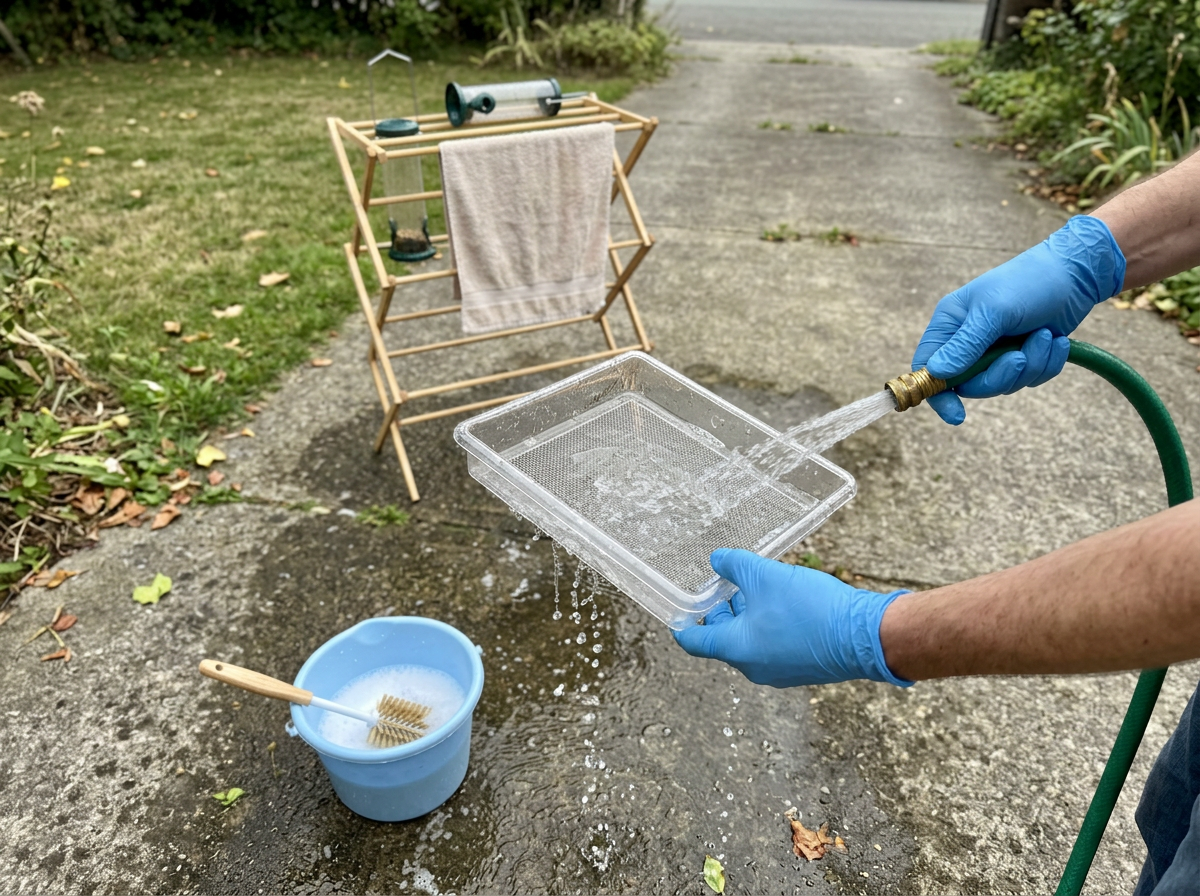
Clean your platform feeder or tray at least every two weeks as a baseline. In warm, humid weather or during heavy use, clean it weekly or even more often. The cleaning process is straightforward: scrub the surface with a stiff brush, then rinse with a solution of 1 part bleach to 9 parts water, let it soak for a few minutes, rinse thoroughly with clean water, and let it dry completely before adding food again. Putting food back into a damp tray is one of the most common causes of mold problems, so that last drying step matters.
Cleaning up seed spills and waste underneath
Ground-level feeding especially tends to leave waste behind. Rake or sweep the area under and around your feeding spot regularly, at least every week. Old seed hulls, uneaten fruit, and droppings create conditions that attract rodents and insects and can harbor disease. If you use a ground tray rather than a raised platform, pick it up daily, dump any leftovers into a compost or waste bin (not back into your seed storage), wash the tray, and let it dry. Keeping the feeding area tidy is not just about hygiene for you, it actively protects the birds you are trying to help.
If you notice rodents around your feeding area, switch entirely to a raised platform feeder and stop any ground feeding temporarily. Rodents are less likely to climb a smooth-pole mounted tray than to raid a ground spot. Also consider reducing the amount of food you put out so there are no overnight leftovers sitting on the ground.
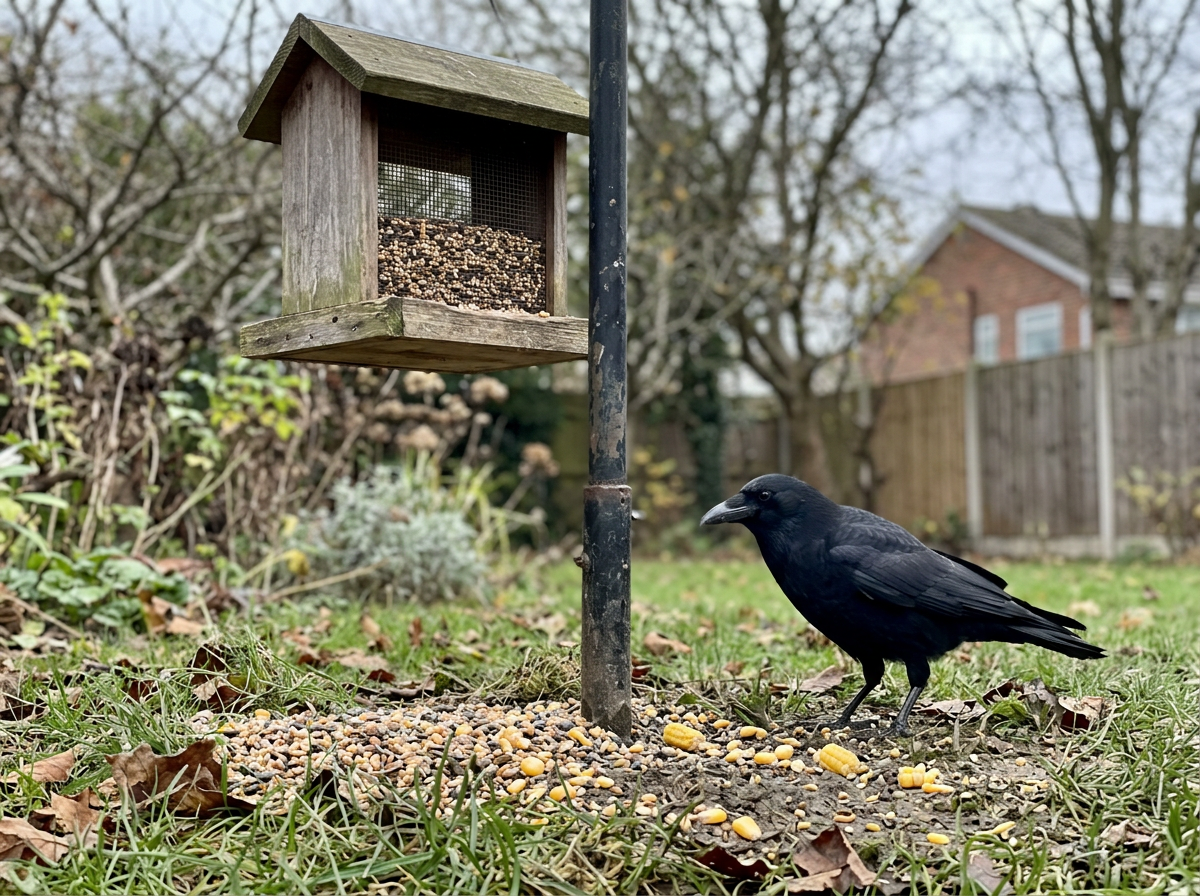
One last practical note: if you are also feeding other bird species alongside robins (sparrows, jays, or blackbirds for instance), the tray setup you build for robins will be accessible to many ground-feeding and platform-feeding birds. You might find species you did not expect showing up. That is not a problem, but it does mean your food will go faster and your cleaning schedule should be adjusted accordingly.